
Most crashes in Cary are not dramatic. They are a rear-end tap at the light on Kildaire Farm Road, a parking-lot scrape at Crossroads, a merge that went wrong on the Harrison Avenue ramp. The car may still look drivable. What you do in the next twenty minutes affects your safety, your insurance claim and whether you turn a bumper repair into an engine replacement by driving away. Here is the checklist, the places in Cary where fender benders cluster, and how the tow afterward should work.
The first five minutes
- Check for injuries. Yours, your passengers’, the other car’s. If anyone is hurt, call 911 first. Adrenaline hides pain; if your neck or back feels off later, get checked.
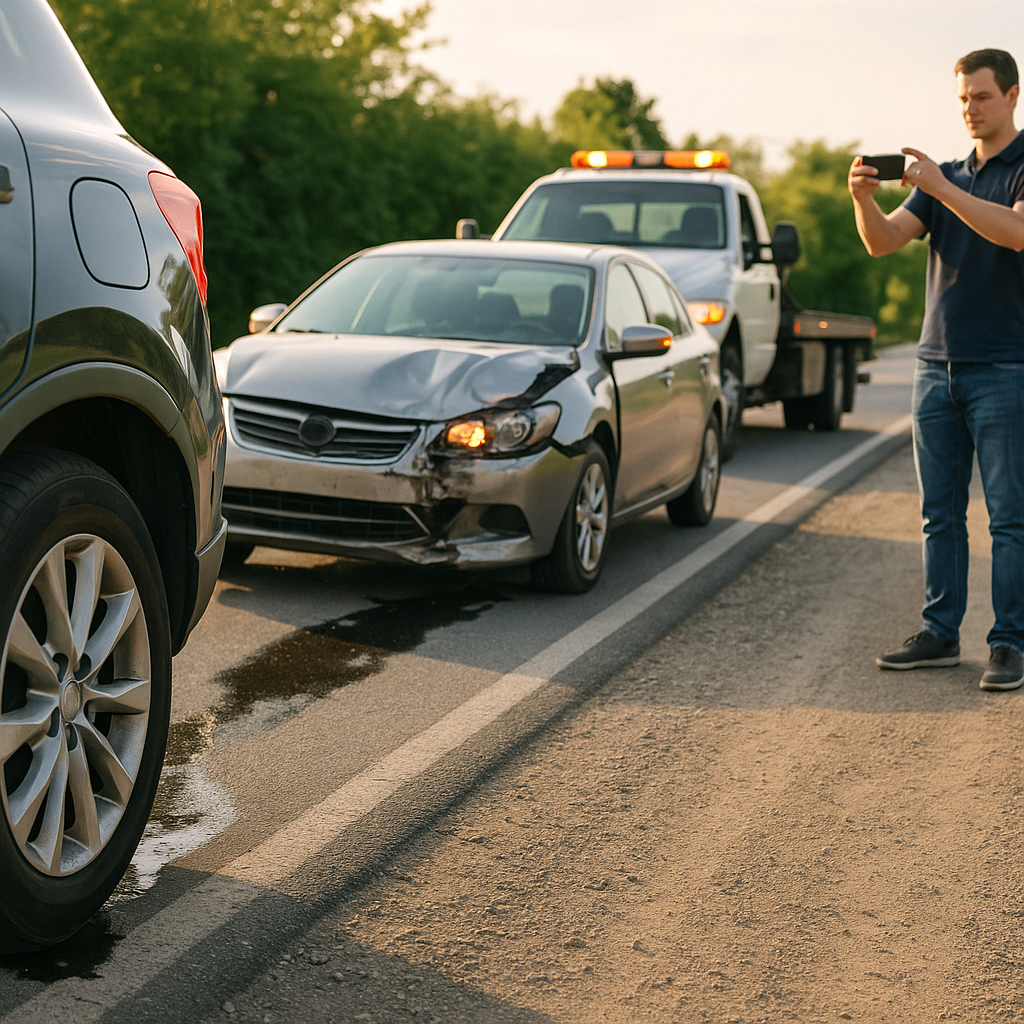
- Get out of traffic if you can. North Carolina law asks drivers in minor crashes with no injuries to move vehicles out of the travel lanes when it is safe. On I-40, US-1 or Cary Parkway, staying in the lane to “preserve the scene” is far more dangerous than moving to the shoulder. Take a quick photo of the positions first if you can do it safely, then move.
- Hazards on. Both cars.
- Call the police for anything beyond a parking-lot scrape. In Cary, a crash report is valuable for insurance even when both drivers are polite. On the interstate, the Highway Patrol or Cary PD will come; in a private lot, police may not write a report but will document it.
- Do not discuss fault. Exchange information, be courteous, and let the insurance companies sort it out. “I’m sorry” at a crash scene has a way of ending up in a claim file.
What to collect
- The other driver’s name, phone number, insurance company and policy number (photograph their insurance card and license plate).
- Photos of all four sides of both cars, close-ups of the damage, the road, the signs and signals, skid marks, debris, and the weather.
- Names and numbers of any witnesses.
- The responding officer’s name and the report number.
- Your own notes on what happened, written within the hour while it is fresh.
Drive it or tow it?
This is where people get it wrong. A car that “seems fine” after a hit can have damage you cannot see from the outside.
Tow it if:
- Any airbag deployed. The car is not safe to drive and most insurers will require a tow anyway.
- There is any fluid on the ground: coolant (green, orange or pink), oil, or transmission fluid (red). Driving with a cracked radiator will destroy the engine in a few miles.
- A wheel is visibly out of position, the car pulls hard, or there is a grinding or rubbing noise when it rolls. Bent suspension is common even in low-speed hits.
- A headlight or taillight is broken and it is dark or raining.
- The hood will not latch, a door will not close, or a bumper is dragging.
- Warning lights came on that were not on before.
Drive it, carefully, if: the damage is clearly cosmetic (a scuffed bumper, a dented door), nothing is leaking, all lights work, the car tracks straight and there are no new noises. Even then, have it inspected within a few days; hidden damage to bumper absorbers and mounts is common.
The tow after a crash: know your options
If police are on scene and the car cannot be driven, the officer may call the next company on the police rotation list. That is legitimate, but it means you do not choose the company or where the car goes, and the car will usually be taken to that company’s storage lot, where daily fees begin immediately. If you are able, you have another option: call a towing company you choose and tell the officer one is on the way. In most non-blocking situations, the officer will allow it. Your car then goes directly to your body shop, your mechanic or your home, and you avoid storage fees entirely.
WTF Towing’s dispatch answers (919) 230-4498 around the clock. Tell the dispatcher it is a collision, whether the car rolls and steers, and where you want it taken. Collision-damaged cars go on a flatbed, and the driver will handle a car with a locked wheel or a dragging bumper without adding to the damage.
Where fender benders happen most in Cary
Knowing the hotspots makes you a more defensive driver in them.
- Cary Parkway at Kildaire Farm Road and at High House Road. Large, busy intersections with long left-turn queues.
- Walnut Street and the Crossroads Plaza entrances. Constant turning traffic, short merges, and drivers looking for stores instead of brake lights.
- Kildaire Farm Road between Tryon and Cary Parkway. Rear-end collisions at every light during the evening rush.
- Harrison Avenue at I-40. The ramp merges and the Weston Parkway interchange back up daily.
- Davis Drive and NC-54 / Morrisville-Carpenter Road. RTP commuters, school traffic and a lot of lane changing.
- Chapel Hill Road (NC-54) through downtown and toward Maynard. Two lanes, frequent driveways and unprotected left turns.
- Parking lots everywhere, especially Saturday afternoons at the grocery stores along Kildaire Farm Road and the centers along Cary Towne Boulevard.
Calling your insurance
Report the crash the same day, even if you think you will pay out of pocket; policies require prompt notice. Have the report number, the photos and the other driver’s information ready. Ask whether your policy covers a tow to the shop of your choice and whether you need to use a specific network body shop or can pick your own (in North Carolina you can choose your own shop). If you had the car towed by a company you called, keep the receipt for reimbursement.
The days after
- See a doctor if anything hurts, even a little. Soft-tissue injuries show up on day two.
- Get the car inspected by a body shop even for “minor” damage. Bumper covers hide crushed absorbers and bent reinforcement bars.
- If the car went to a storage lot, get it out as soon as possible. Every day costs money, and a car sitting in a lot is not being repaired.
Frequently asked questions
Do I have to call the police for a small crash in Cary? North Carolina requires reporting crashes with injury, death or apparent property damage of $1,000 or more, which covers almost any modern car. A report also protects you if the other driver’s story changes.
Can I have my car towed to my house instead of a body shop? Yes. You choose the destination when you arrange the tow.
The other driver wants to handle it without insurance. Should I? Be cautious. Damage estimates are almost always higher than they look, and you have no protection if the other person disappears.
Will you tow a car with a wheel that will not turn? Yes. Tell the dispatcher; the driver will bring dollies or winch it onto the flatbed.
WTF Towing – 24/7 towing and roadside help in Cary, NC.
Answered 24/7 · WTF Towing in Cary