
Not every tow is one you asked for. Cary’s apartment complexes, shopping centers and townhome communities all use towing to enforce parking rules, and every week someone walks out to an empty space. Some of that towing is legitimate. Some of it is predatory, and there are rules about how it is supposed to work. This guide explains your rights under North Carolina law and Cary’s local ordinance, how to tell a legal tow from an illegal one, what to do if your car has been towed, how to avoid roadside scams, and how tow zones work at the places where people get caught most.
Private property towing: the rules
North Carolina law (General Statute 20-219.2) and the Town of Cary’s towing ordinance set conditions that a property owner and the towing company must meet before a car can be towed from private property without the owner’s consent. The key ones:
- Signs. The lot must have conspicuous signs at the entrances stating that unauthorized vehicles will be towed, and naming the towing company and a phone number where the vehicle can be located. No proper signs, no legal tow.
- Fee limits. Cary’s ordinance caps what can be charged for a non-consensual tow from private property, including the tow itself, daily storage and any after-hours release fee. Ask for the current fee schedule; it is public.
- Access to your car. The towing company must let you retrieve the vehicle within reasonable hours and must accept common forms of payment (not cash only).
- Drop fee. If you arrive while your car is being hooked but before it leaves the lot, you can generally have it released on the spot for a reduced “drop” fee rather than the full tow.
- Notification. The towing company must notify local law enforcement that the vehicle was towed and where it is, so that when you call the police to report it stolen, they can tell you where it is.
If any of these were not followed, you may have grounds to dispute the charges. Photograph everything: the space you were in, the signs (or lack of them) at every entrance, the time, and any permit or pass you had displayed.
Apartment complexes: know your lease
Most towing complaints in Cary come from apartment and townhome communities. The rules are usually in the lease or the community’s parking policy, and the common triggers are: no permit or an expired permit, parking in a reserved or fire-lane space, backing into a space where the tag must face out, a visitor in a resident-only area, an expired registration or inspection sticker, and cars that appear inoperable. Read the policy when you move in. If a guest is staying more than a night, get a visitor pass. And if your community has just changed towing companies, expect enforcement to be aggressive for the first month.
Shopping centers and tow zones
The big centers around Cary (Crossroads Plaza, the area around Cary Towne Boulevard, Parkside Town Commons, Waverly Place, downtown Cary’s lots) mostly enforce against commuters who park and leave for the day, overnight parking, and cars left for days. Grabbing lunch and shopping is not the problem; leaving the car there while you take the train to Raleigh is. Downtown Cary has a mix of public lots, private lots and time-limited street parking, and the signs are specific about which is which. Read them.
Fire lanes and accessible spaces are enforced everywhere, immediately, and a citation from the town can come with the tow.
Neighborhood streets and HOAs
On a public street in Cary, an HOA cannot tow you; only the town can, and only for a violation of a town ordinance (blocking a hydrant, a sidewalk, a driveway, or parking against the flow of traffic). On private streets inside a community, the HOA’s rules apply and they can arrange towing, subject to the same sign and fee requirements. The distinction matters, and it is not always obvious which kind of street you are on; the HOA documents will say.
What to do if your car is gone
- Check the signs at the lot entrance for the towing company’s name and number. If there are no signs, note that and photograph the entrances.
- Call the towing company (or the police non-emergency line to find out where it went).
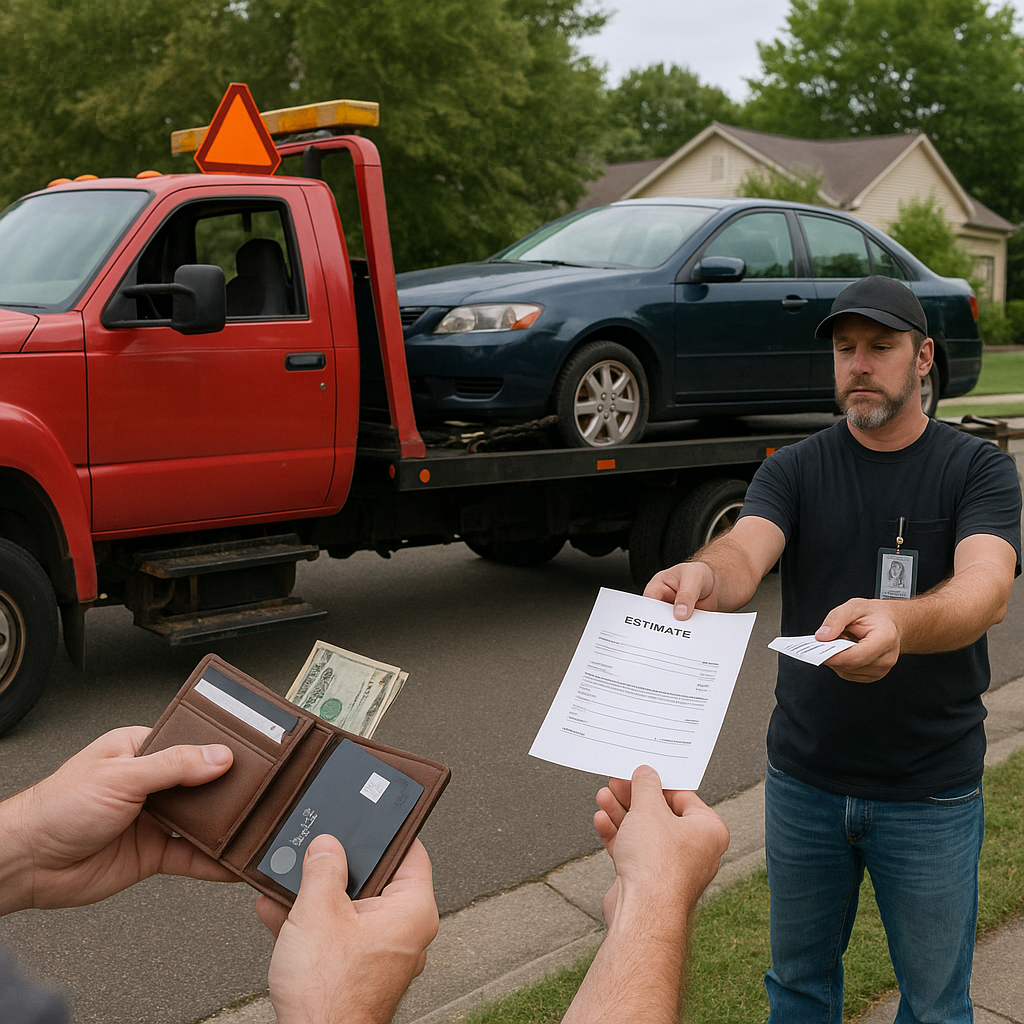
- Ask for the total to release the car and the hours you can pick it up. Compare the charges to Cary’s fee schedule.
- Bring ID, proof of ownership (registration or title) and a payment method.
- Inspect the car before you leave the lot and photograph any new damage.
- Get an itemized receipt. If you believe the tow was illegal, you can dispute it with the towing company, file a complaint with the town, or pursue it in small claims court.
Roadside scams: the other kind of predatory towing
After a crash, a tow truck sometimes shows up that nobody called. These “accident chasers” listen to scanners and race to scenes, hook the car fast, and take it to a storage lot with high daily fees and a hefty release charge. Some look legitimate; some are not licensed at all. Protect yourself:
- Do not let anyone hook your car unless you called them or the police officer on scene tells you they are the rotation tow.
- Ask for the company name and the price before the car moves. A legitimate operator tells you both without hesitation.
- Look for markings. Licensed tow trucks in North Carolina display the company name and USDOT number on the doors. An unmarked truck is a red flag.
- Do not sign anything you have not read. Some scam operators use “authorization” forms that commit you to storage and fees.
- Call your own company. If you are able, arranging your own tow means you choose the destination and know the price. The featured provider’s number is (919) 230-4498, and the dispatcher will tell you the price before a truck is sent.
Police-rotation tows after a crash are legitimate, but the car still goes to that company’s lot unless you direct otherwise. If you are physically able and the officer allows it, tell them you have your own tow on the way.
Campus and student parking
Students commuting to campuses around the Triangle run into aggressive permit-lot enforcement, and visitors who park in permit lots without reading the signs are towed routinely. The same rules apply: signs, fees, and a right to an itemized receipt. If you drive to campus regularly, buy the permit; it is cheaper than one tow.
Frequently asked questions
Can they tow me if there were no signs? In most cases, no. Photograph the entrances and dispute the tow.
Can a towing company demand cash only? Cary’s ordinance requires accepting standard forms of payment. Cash-only is a violation.
My car was damaged during the tow. What now? Photograph it before leaving the lot, note it on the receipt, and file a claim with the towing company’s insurance. If they refuse, small claims court is the next step.
Who do I call about a tow I did not ask for? The towing company named on the lot’s signs, or the Cary Police non-emergency line to locate the vehicle. For a breakdown, a roadside problem or a tow you want to arrange yourself, call WTF Towing at (919) 230-4498.
WTF Towing – 24/7 towing and roadside help in Cary, NC.
Answered 24/7 · WTF Towing in Cary