

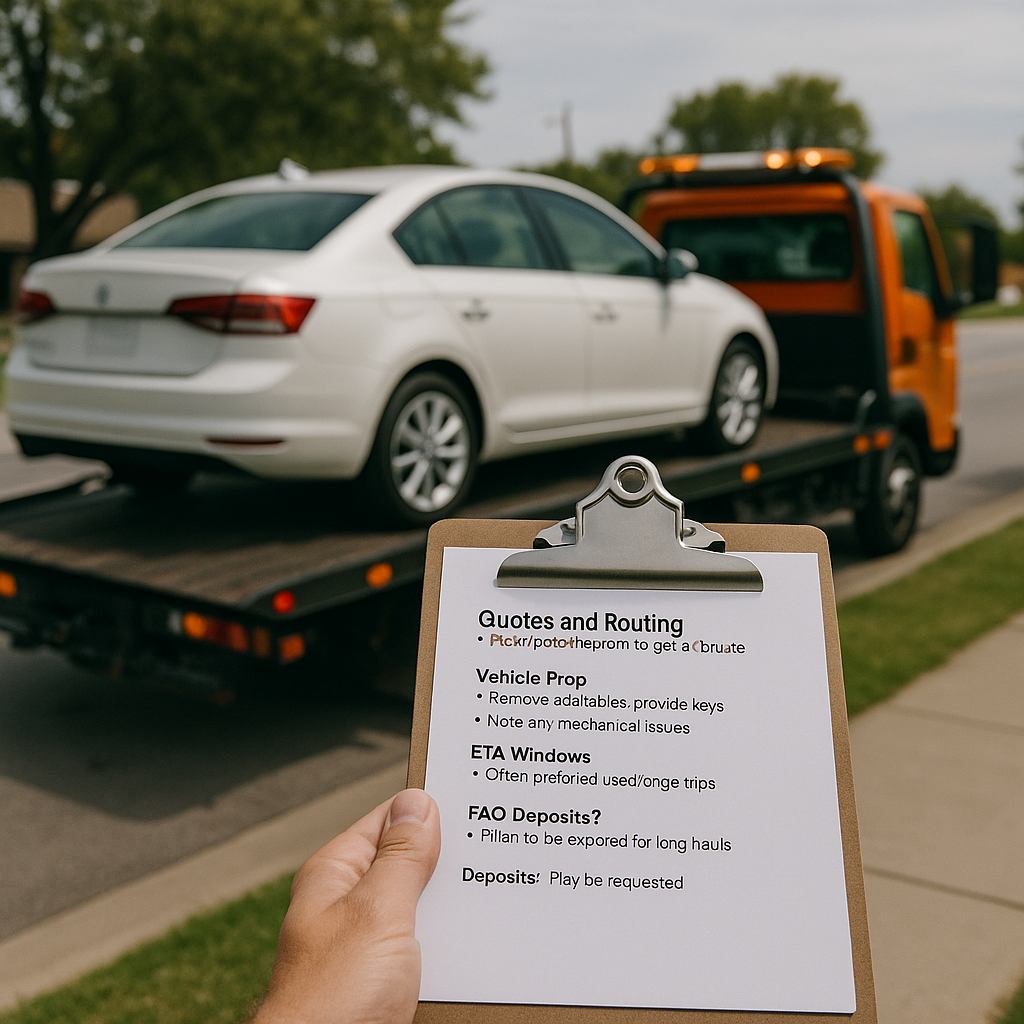
Not every tow ends at a shop across town. Cary drivers move a lot of cars long distances: a student’s car to a campus in another state, a project car bought two hours away, a breakdown on a road trip that needs to come home, a relocation where the second car cannot be driven. Long-distance towing is a different service from the emergency tow off I-40, with more planning and more that can go wrong if it is done casually. Here is how to plan one, what drives the price, what to expect on the day, and the questions to ask any company before you hand over the keys.
When long-distance towing makes sense
- A breakdown away from home. Your car died in Rocky Mount or Greensboro and you would rather have your own mechanic in Cary fix it than a stranger’s shop.
- Buying or selling a vehicle that is not drivable, or that you do not want to add miles to.
- Moving. A second car, a car with an expired registration, or a car that is not roadworthy.
- Students. Getting a car to or from a campus in another city, especially at the start and end of semesters.
- Classic, exotic and show cars that should ride on a flatbed rather than be driven in traffic.
- Dealer and warranty situations where the car needs to reach a specific dealer that is not close.
Flatbed only
Long-distance moves are always done on a flatbed. A car dragged on two wheels for a hundred miles adds wear and risks the transmission; on a flatbed it arrives with exactly the miles it left with. All-wheel drive, EVs and low cars have no other option anyway. See flatbed vs. wheel-lift for why.
What drives the price
Long-distance pricing is mostly mileage, and the quote should be a firm number for the trip, not an estimate that grows on the road.
- Distance from pickup to drop-off. The biggest factor by far.
- The vehicle. A compact sedan and a three-quarter-ton pickup are different loads.
- Condition. A car that rolls and steers loads quickly. One that does not needs winching and possibly dollies, which adds time at both ends.
- Access at both ends. A tight storage lot, a steep driveway or a gated community with limited hours affects the schedule.
- Timing. Same-day pickup after a breakdown costs more than a trip scheduled a few days out, because it pulls a truck off the local rotation.
- Return trip. A truck that drives 150 miles out drives 150 miles back, usually empty. That is built into the price.
Ask for the total, in writing (a text or email is fine), before the truck is dispatched. The general towing cost guide covers what should and should not appear on a bill.
Planning the trip
- Pick a date and window. A scheduled long-distance tow is cheaper and smoother than an emergency one. If the car is already broken down out of town, ask about the earliest practical pickup rather than the earliest possible one.
- Confirm both addresses and any access details: gate codes, hours, a contact person at the destination, whether the shop can receive the car after hours.
- Prepare the car. Remove valuables and loose items. Note the fuel level and mileage. Photograph all four sides and the interior.
- Documents. Have registration or proof of ownership available. If someone else is releasing the car (a shop, a seller, a storage lot), make sure they know the tow company is coming and have authorization.
- Keys. The driver needs them to load and unload safely, and the destination needs them. Plan the handoff.
- Payment. Know whether it is due at pickup, at delivery, or by deposit and balance.
What happens on the day
The driver arrives in the agreed window, inspects the car with you (or the releasing party) and notes any existing damage, loads it, secures it at all four wheels, and confirms the destination and contact details. You will usually get a call or text when the car is on the road and again when it is close. At drop-off the driver unloads, does the same walk-around with whoever receives the car, and hands over the keys. If you are riding along, most trucks can take one or two passengers for the trip; confirm when you book.
Questions to ask before you book
- Is the quote a firm total for the trip, including fuel and return?
- Is the truck a flatbed?
- Will my car be the only vehicle on the truck, or is it a multi-car carrier that makes other stops? (Both are fine, but they have different timelines.)
- Is the company insured for the vehicle while it is in transit, and can they provide a certificate on request?
- How will I be updated during the trip?
- What happens if the destination cannot receive the car when the truck arrives?
A company that answers these directly is a company you can trust with the trip. One that will not give a firm price or gets vague about insurance is one to skip.
Long-distance towing from Cary
The featured provider, WTF Towing, runs flatbed rollbacks for scheduled and same-day long-distance moves in and out of Cary, Apex, Morrisville, Holly Springs and RTP: to the coast, to the mountains, to Charlotte, Greensboro, the Triad and beyond, and to campuses and dealers across the region. Tell the dispatcher where the car is, where it is going, what it is and whether it rolls, and you will get a firm price for the trip. Call (919) 230-4498, or see long-distance towing.
Frequently asked questions
How far will they go? Give the dispatcher the destination and they will tell you honestly whether it is a trip they can do well and what it costs.
Can they pick up a car I bought from a private seller? Yes. Make sure the seller has the title and keys ready and knows when the truck is coming.
Can my car be delivered to a closed shop? Often yes; the driver leaves the car in the lot and the keys in the drop box if the shop allows it. Confirm with the shop first.
Is a broken-down car more expensive to move than a running one? If it needs winching to load, there is extra time involved. The dispatcher will factor it into the quote.
WTF Towing – 24/7 towing and roadside help in Cary, NC.
Answered 24/7 · WTF Towing in Cary